The plan also includes $255-million a year to help historically black colleges, as outlined in the House bill.
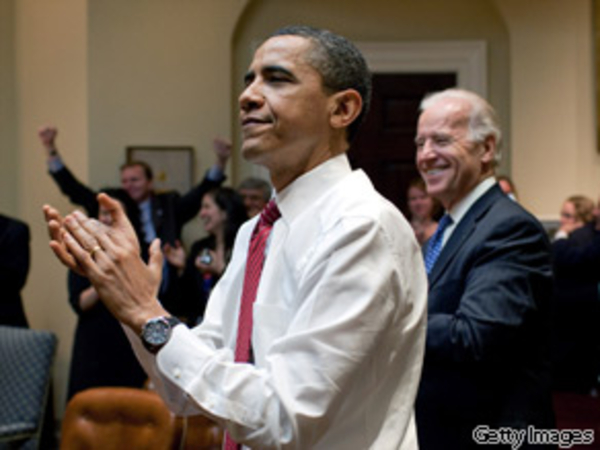
President Obama signed into law some legislation to overhaul the student-loan system, promising annual inflation-adjusted increases in the maximum Pell Grant and billions of dollars in additional aid for higher education. To help the passage of the new healthcare plan, this student loan overhaul was part of a strategy; combining both bills into a single measure.
The student-loan portion of the plan would end the bank-based system of distributing federally subsidized student loans, and instead would have the Education Department give all loan money directly to colleges and their students.
The change was estimated last year to save the government $87-billion over 10 years. Delays since then left lawmakers facing a new estimate of about $67-billion over 10 years, prompting Democrats to cut some of the benefits contained last September in a House-passed version of the bill, including money for community colleges and for additional loans for low-income students.
The final plan would use $36-billion of those savings to increase the maximum value of a Pell Grant, currently scheduled to reach $5,550 in the coming academic year, by the rate of inflation each year for the next 10 years. The Obama administration had asked Congress to approve an annual increase equal to the rate of inflation plus one percentage point.
The plan also includes $255-million a year to help
historically black colleges, as outlined in the House bill. It includes $750-million over five years for College Access Challenge grants, which would support state efforts to enroll and graduate underrepresented students, down from $3-billion over 10 years in the earlier House version. And it includes $2-billion over four years to help community colleges, despite suggestions last week that the money would be cut altogether.
The Democratic bill also includes $1.5-billion over 10 years to finance the Obama administration's proposal to limit the mandatory monthly payments on a federally subsidized student loan to 10 percent of discretionary income, down from the current 15 percent, and to forgive the loan entirely after 20 years instead of the current 25 years.
 Posted By: Reginald Culpepper
Thursday, March 25th 2010 at 1:10PM
You can also
click
here to view all posts by this author...